A GUIDE TO 

NEW MEETINGS

About

MEET THE WORLD

A lot has happened in the world in the three years since LIONS GOOD NEW 2020, and the advertising and communication industries have seen much change. New ways of doing things and all kinds of buzz words have appeared one after another. For LIONS GOOD NEWS 2023 and with the help of over one hundred nonprofits striving for a better world in the current environment, we were able to identify communication challenges faced by our world today. What we found were a variety of problems, ranging from not being recognized or heard, or there being no new meetings. Advertising is often compared to writing a love letter, but the methods by which we send messages or meet new people must change in keeping with the times, much like how email replaced handwritten letters. How can information reach target audiences? How can we meet the people we want to meet? Enjoy the great works of CANNES LIONS past and present, and discover your own new way of making new connections.

A Summary of the LIONS GOOD NEWS 2023 NPO Survey

According to the survey results, 56.4% of organizations reported difficulty in getting recognition from stakeholders for their organization name or activity, which is higher than the percentage of those who struggled with understanding (52.8%) or empathy (48.1%). The survey also revealed that 80.6% of respondents believed that their messages only reach specific target audiences, indicating a significant challenge in reaching a wider audience. Moreover, 69.5% of organizations expressed uncertainty over the effectiveness of their communication activities in leading to donations and other aids, while 70.4% said they were unable to adequately communicate due to staffing and budgetary limitations. The open-ended questions in the survey received numerous responses describing the difficulties nonprofits encounter in raising public awareness of their organization's name and activity. A significant proportion of organizations voiced concerns about engaging younger generations, as the number of young people participating in their activities diminishes. As a result, some organizations are looking to improve public relations and digital communication in their succession planning. Furthermore, "interacting with supporters" and "collaborating with businesses" were identified as areas that organizations wished to strengthen in their communication strategies, with 68.5% and 61.1% of respondents respectively selecting these areas. Many organizations also cited "interacting with supporters and businesses" as an area for improvement in the open-ended questions, while meeting new people, businesses, specific communities, and partner organizations who may be interested in the organization's activity were also popular responses.

Comments for
LIONS GOOD NEWS 2023

Communication issues during the COVID-19 pandemic

In October 2022, in the midst of the COVID-19 pandemic, the WWF released the Living Planet Report 2022. The report stated that the health of nature and biodiversity has decreased by 69% over the past 50 years. The power of communication is required at all times to solve these global environmental issues. One perceived communication issue is properly conveying slightly complicated information based on scientific knowledge and data to as many people as possible. Environmental issues involve many actors and stakeholders, but as more people get involved, the words, actions, and situations from their perspectives and intentions become intertwined. In addition, as system thinking exemplifies, if we do not approach complex environmental issues as a single system from a wide perspective, even if we solve one issue optimally, another issue will eventually surface, and we will fall into a negative loop in which we are unable to globally optimize. And if an explanation is too complicated and difficult to say in a single phrase, people hesitate when communicating and talking to others, or they give too much evidence trying to be accurate, resulting in lengthy descriptions. We focus on the various intentions of information providers, various situations of information receivers, and how to connect them accurately and appropriately.

When tackling these issues, the first thing we value is a method of solving social issues called the Theory of Change. In order to view the situation from a wide perspective, we use a method called stakeholder mapping to write down what kind of people are involved in environmental issues and visualize the relationships. The next step is to do direct hearings. We look for insights into what the people involved are thinking and what they want to do under what circumstances. Then, we develop specific strategies by pinpointing the leverage points, bottlenecks, and points of engagement between the information sender and the receiver. Lastly, we do creative jumps to exercise our creativity. We either going back and forth through the process or run a prototype first, and update our communication measures incrementally. While taking these steps, we communicate clearly without using vague words.

In the next stage, we use SAVE NATURE PLEASE, a behavioral change framework for environmental conservation promoted by the WWF (https://www.wwf.or.jp/campaign/snp/). Execution is just as important as logical clarity, if not more so, controlling the expression quality of the final output—whether it makes someone smile, be deeply moved, or want to talk—greatly affects how whether the message is communicated. The WWF focuses on changing people's awareness and behaviors using behavioral science. Peoples' awareness and behaviors cause environmental issues, but they can also solve them. Part of the framework is NATURE, a set of behavioral rules that should be considered in the execution process. For example, “Normal” means it is essential to have a social identity in the community and normalize behaviors in said community by spreading them and mutually supporting each other. “Rewarding” means that people are affected in incentives and disincentives and take deliberate actions to avoid losses, so we polish our expression techniques by applying TIPS and success cases.

In addition to these guidelines and frameworks, we think it will be increasingly important to choose who to work with. In order to make even bigger social impacts, it is essential to not just use resources within the walls of NGOs, NPOs, and organizations, but to garner empathy and cooperate with people outside. We must look for creative people to cooperate with who can bring about overall optimization, not just partial. We believe that in order to be discovered by those people and garner their interest, we must constantly communicate what we are thinking and want to do.

Based on that policy, WWF Japan has spent recent years working on a campaign to prevent wild animals under the threat of extinction from being kept as pets (https://www.wwf.or.jp/campaign/uranokao). In a survey on people's awareness of raising wild animals as pets, 68% of respondents said that they were not knowledgeable about extinction, poaching, smuggling, and other risks. In order to change the awareness of those who want to raise wild animals that face these risks, we have started making and publicizing videos in which zookeepers explain the animals' ecology, behaviors, and difficulties and risks in raising them. We want people to know that these animals should not be raised as pets no matter how cute they are, and we have received wide approval.

Actions that the world should pay attention to, and practicing communication

We are currently focusing on “nature positive.” There is news on carbon neutrality and sustainability from every direction. In order to create a decarbonized society, countries are making their responsibilities and targets regarding climate change clear while making concrete efforts toward decarbonization. Biodiversity will be the next hot topic. As mentioned at the beginning, in order to make up for the 69% loss in biodiversity in the last 50 years, we are taking actions to reverse the curve and recover by 2030. At the fifteenth meeting of the Conference of the Parties to the Convention on Biological Diversity held in December 2022, several decisions were adopted, including one to turn at least 30% of the land, inland water, and ocean areas in the world into nature preserves. Each country made concrete goals, including those in areas related to people's livelihoods—government, economy, and finance—and they are about to begin working toward them. Please watch our Nature Positive movement.

Our communication staff are also regularly engaged in the various successful research mentioned here. The globally praised award-winning cases here are full of creative ideas that have contributed to solving social issues and serve as study material. Our staff visit ad museums and other places and attend case explanation seminars to explore why they bring about results and move hearts. We believe we should not only look at the issues we are tackling, but also at many other things broadly without thinking about them too much. Our site offers an “Outside-the-Box Search” experience powered by the Open AI ChatGPT, and I think it is an excellent effort to intentionally or unintentionally avoid the recent filter bubbles and create new encounters. The famous book “A Technique for Producing Ideas” (authored by James W. Young and published by CCC Media House) says that new ideas are combinations of existing ideas, and first of all you should gather information from every aspect. To actually improve the accuracy and quality of ideas, we believe it is important to learn about many subjects on this site that might be unrelated to you, read about them deeply, and think about how they can help solve issues openly without bias.

WWF Japan (World Wide Fund for Nature Japan)

The WWF is an environmental conservation organization founded in Switzerland in 1961 that is active in more than 100 countries. It promotes the creation of a sustainable society, aiming for a future where people and nature can live in harmony. In order to restore the abundant, but rapidly disappearing, biodiversity and create a decarbonized society to prevent global warming, it promotes the conservation of rare wildlife and sustainable production and consumption.

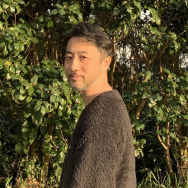
Head of the Brand Communication Office of WWF Japan (World Wide Fund for Nature Japan)

Tomonori Watanabe

Majored in International Relations and Communication Studies. After graduating, he worked at an advertising company in public relations, marketing, and promotion, and as a copywriter and commercial planner. In 2007, he joined Save the Children Japan as head of communications, and in 2015 joined WWF Japan (World Wide Fund for Nature Japan) as head of brand communication. He is currently working on promoting change in awareness and behavior regarding global environmental conservation.

We interviewed over 100 nonprofits,

and found that communication barriers are hindering new connections.